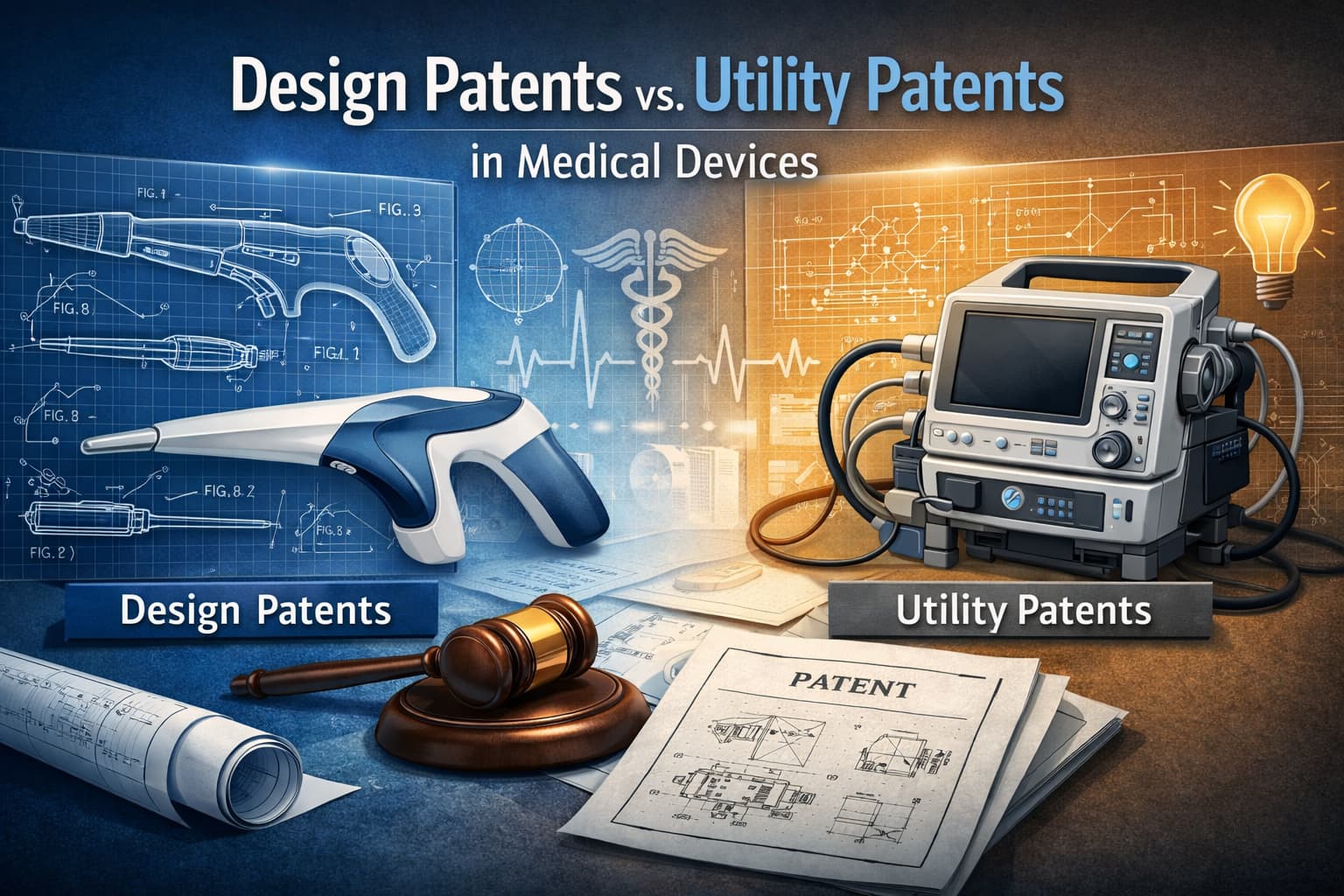
In the world of medical innovation, intellectual property protection is paramount. It forms the bedrock of incentivizing new discoveries and technological advancements. Among the various forms of intellectual property protection, patents often stand out as a key safeguard. This blog post aims to demystify two types of patents, namely design and utility patents, particularly with respect to medical devices. We will explore their individual characteristics, benefits, and limitations.
Design Patents: The Aesthetic Protector
A design patent, as the name suggests, protects the unique appearance or design of a product. It safeguards the way a product looks—the configuration, shape, pattern, or ornamentation. It does not protect the product’s functionality or structure, which is covered under utility patents.
Design Patents and Medical Devices
In the context of medical devices, a design patent can be a potent form of protection. Imagine a distinctive looking surgical instrument or an ergonomically designed medical equipment handle. A design patent can protect these visual features of a medical device.
When applying for a design patent, it’s essential to provide detailed drawings of the design from various angles. Clear, precise illustrations are fundamental as the protection conferred is strictly based on the drawings provided in the application.
It’s important to note that design patents protect only what they depict. If the design is altered, the design patent’s protection may not apply. This characteristic makes it crucial to consider the stability of the design before pursuing a design patent.
Utility Patents: The Functionality Guardian
On the other side of the patent spectrum are utility patents. These patents protect how a product works—its functionality, method, or process. This is the most common type of patent and, in many cases, the first thought when it comes to patent protection.
Utility Patents and Medical Inventions
In the realm of medical devices, utility patents can provide broad protection. They can cover a range of inventions, from a new type of surgical instrument to an innovative diagnostic device or a unique therapeutic machine.
When applying for a utility patent, you need to provide a detailed description of the invention, ensuring that the invention’s novelty and non-obviousness are clearly highlighted. In many cases, you’ll also need to provide drawings or diagrams that help illustrate the invention.
Utility patents can be a particularly strong form of protection as they can prevent others from making, using, or selling the patented invention, even if the other product does not look the same as your product.
Comparing Design and Utility Patents: Benefits and Limitations
Each patent type comes with its benefits and limitations.
Design patents typically have a shorter prosecution period, meaning they can be granted faster (often within one to two years). They are also less expensive to obtain. However, their protection is limited to the design as shown in the patent and they have a shorter term of protection—15 years from the grant for designs filed on or after May 13, 2015.
Utility patents, on the other hand, offer a broader scope of protection and have a longer term—20 years from the filing date. However, they are generally more expensive to obtain and have a longer prosecution period. They also require payment of maintenance fees to keep the patent in force for the full term.
Choosing the Right Patent for Your Medical Device
Understanding the nuances between design and utility patents can help you develop a robust patent strategy for your medical device. In some cases, it may be beneficial to seek both design and utility patents for complete protection.
While this post provides a foundational understanding of these patent types, it’s crucial to consult with a patent professional when navigating the complex world of patents. They can guide you based on your specific invention and long-term goals, ensuring you have the best possible protection for your medical device.
Contact Zale Law for help with your patent needs.