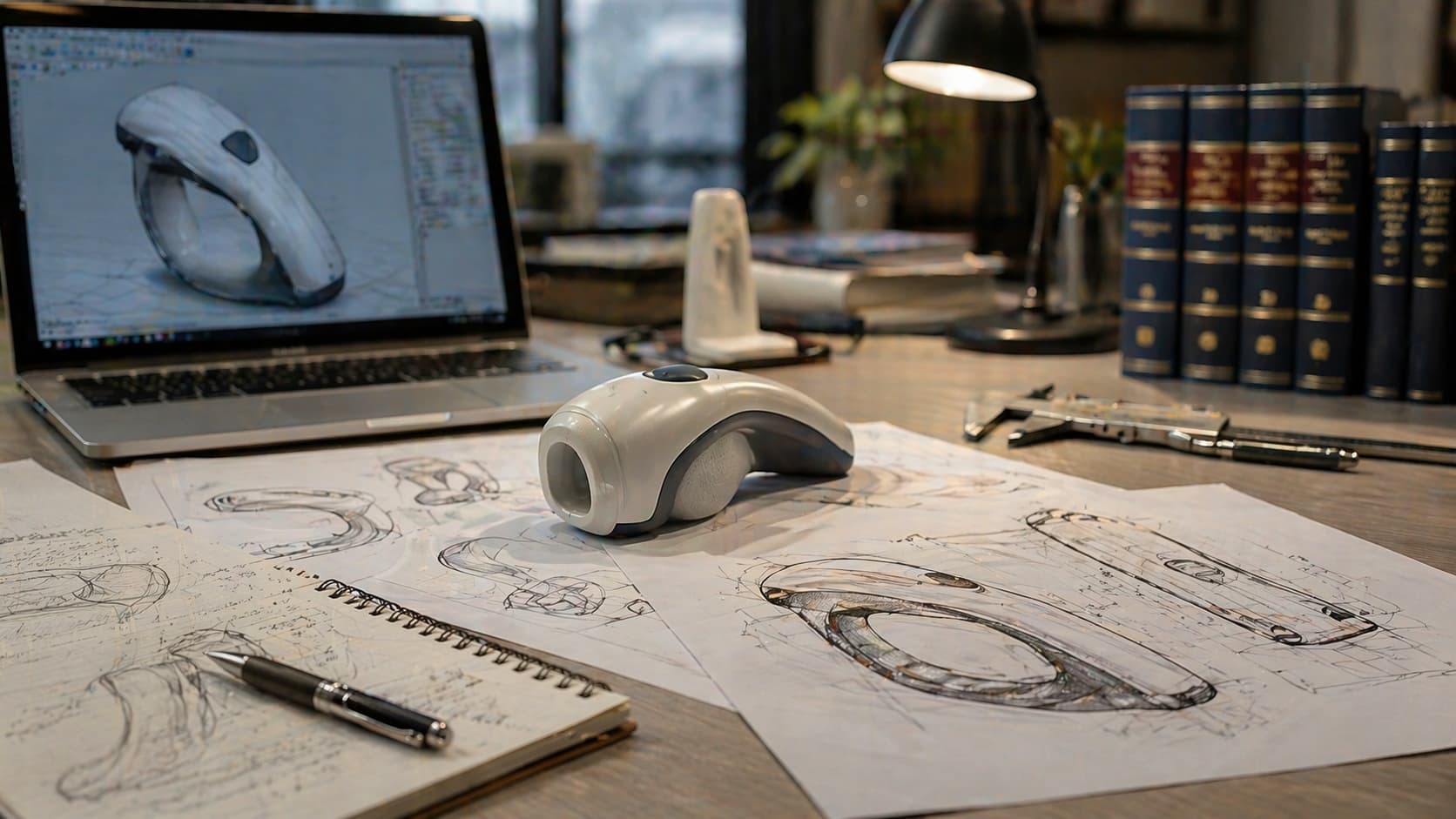
When medical device Inventors think about patent protection, they almost always think about utility patents, which protect how a device works. But there is another form of patent protection that is frequently overlooked in the medical device space: the design patent. A design patent protects the ornamental appearance of a functional article, including its shape, configuration, surface ornamentation, or any combination of these elements.
For medical devices where the visual design is distinctive, a design patent can provide an additional layer of protection that utility patents alone cannot achieve. It can also be faster, less expensive, and more straightforward to obtain.
A design patent protects the way a manufactured article looks, not how it works. The protection covers the specific ornamental appearance shown in the patent drawings. If a competitor produces a medical device that is substantially similar in appearance to your patented design, the design patent gives you the legal right to stop them, even if the competing device works differently than yours.
In the medical device context, design patents are relevant for:
- Handheld Instruments: Surgical tools, diagnostic instruments, and handheld devices with distinctive ergonomic shapes or grip designs
- Wearable Devices: Health monitors, sensors, and wearable therapeutic devices where the form factor is a key differentiator in the market
- Patient-Facing Equipment: Devices that patients interact with directly, where appearance affects comfort, trust, and brand recognition
- Device Housings and Enclosures: The external shells of diagnostic machines, therapeutic equipment, and monitoring stations
- User Interfaces: Graphical user interfaces (GUIs) displayed on screens built into medical devices, including icons, screen layouts, and animated transitions
The key requirement is that the design must be primarily ornamental rather than dictated by function. If the appearance of the device is entirely determined by how it works, with no ornamental element, a design patent may not be available. However, most medical devices have at least some ornamental features that go beyond what function strictly requires.
Design Patents vs. Utility Patents
Understanding the differences between design patents and utility patents is essential for building an effective IP strategy for your medical device. The different types of patents available for medical devices each serve a distinct purpose.
- What Is Protected: A utility patent protects how a device works (its structure, function, and method of operation). A design patent protects how a device looks (its ornamental appearance).
- Scope of Protection: A utility patent prevents others from making, using, selling, or importing any device that performs the same function in the same way, regardless of appearance. A design patent prevents others from making a device that looks substantially similar, regardless of how it functions.
- Duration: A utility patent lasts 20 years from the filing date and requires maintenance fee payments at 3.5, 7.5, and 11.5 years. A design patent lasts 15 years from the grant date and requires no maintenance fees.
- Cost and Timeline: Design patents are typically less expensive and faster to obtain. The application primarily consists of drawings showing the claimed design, with a brief written description. Prosecution is usually simpler because the examination focuses on appearance rather than function, novelty, and non-obviousness in the utility patent sense.
- Infringement Standard: Design patent infringement is assessed under the “ordinary observer” test: would an ordinary observer, familiar with existing designs, view the accused design as substantially the same as the patented design? Utility patent infringement is assessed by comparing the accused device’s structure and function against the patent claims element by element.
Using Both Design and Utility Patents Together
For many medical devices, the strongest IP strategy combines both design and utility patents. The utility patent protects the functional innovation, covering the novel mechanism, process, or composition of matter that makes the device work. The design patent protects the distinctive appearance, preventing competitors from creating knockoff products that look identical even if they function differently.
This dual approach is especially powerful in the medical device market because visual similarity can erode brand value and create confusion among healthcare providers and patients. If a competitor’s device looks like yours, even if it works differently, clinicians may confuse the two products. A design patent gives you the tools to prevent that.
The approach is similar to how trademarks protect brand identity: both design patents and trademarks address the customer’s visual experience of a product. But while trademarks protect the brand association, design patents protect the specific physical appearance of the article itself.
The Design Patent Application Process
Prepare High-Quality Drawings
The drawings are the heart of a design patent application. Unlike utility patents, which rely heavily on written claims, a design patent claim consists of a single claim defined entirely by the drawings. The drawings must show the design from every angle: front, back, top, bottom, left, right, and perspective views. Any feature shown in solid lines is part of the claimed design; features shown in broken lines are disclaimed and shown only for context.
Because the scope of protection is defined by what appears in the drawings, the quality and completeness of these illustrations directly affects how broad or narrow the protection will be. Working with a Patent Attorney who understands how to present medical device designs strategically can make a significant difference in the value of the resulting patent.
File Promptly
Like utility patents, design patents are subject to novelty requirements. If the design has been publicly disclosed, including through marketing materials, trade show displays, FDA publications, or sales, the Inventor has a one-year ‘Grace Period’ in the United States to file. But as with medical device patents generally, any public disclosure before filing can forfeit design patent rights in many foreign countries. Filing before public disclosure is always the safest approach.
Prosecution and Grant
Design patent applications are typically examined more quickly than utility patent applications. The Examiner reviews the drawings against existing designs to determine whether the claimed design is novel and non-obvious over the prior art. If the Examiner finds prior art designs that are similar, the Applicant may need to amend the drawings or argue that the differences are significant. Once granted, the design patent provides 15 years of protection with no maintenance fees.
Real-World Application in Medical Devices
Design patents are increasingly common in the medical device industry as companies recognize the competitive value of distinctive product design. Devices that are comfortable to hold, intuitive to operate, and visually professional inspire greater confidence in clinicians and patients. Protecting that design investment with a design patent ensures that the novel shape, not just function, is not copied.
For medical device Inventors weighing the pros and cons of patenting, a design patent offers a lower-cost entry point that can complement a utility patent strategy or stand on its own when the device’s primary differentiator is its appearance.
Protect the Full Value of Your Medical Device
Attorney Lawrence P. Zale has decades of experience working with medical device Inventors on both utility and design patent strategies. His portfolio spans hundreds of patents across medical technologies, and his biomedical engineering background allows Zale Law to understand both the technical function and the design considerations that matter in this industry.
Contact Zale Patent Law, Inc.at 570-878-5000, or ip@zalelaw.com to schedule a confidential consultation about patent protection for your medical device.